

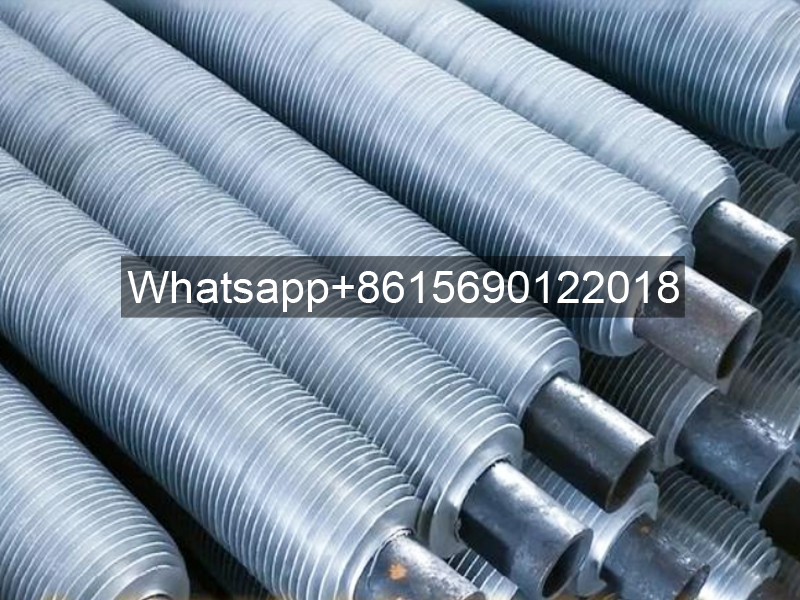
Product Name: ASME SB-210 Alloy 1060 Aluminium External Fin tubes
- Leave Your Message
1. Introduction to ASME SB-210 Standard
ASME SB-210 is a technical specification standard for aluminum and aluminum alloy seamless tubes established by the American Society of Mechanical Engineers (ASME). This standard comprehensively regulates the material composition, mechanical properties, dimensional tolerances, and other technical requirements for aluminum seamless tubes, ensuring their quality and performance in industrial applications.
- Scope of Application: Covers seamless aluminum tubes for industrial use
- Technical Requirements: Includes chemical composition control, mechanical performance indicators (tensile strength, yield strength, elongation, etc.), and dimensional tolerances
- Manufacturing Processes: Encompasses key production stages such as smelting, rolling, and heat treatment
2. Material Characteristics of Alloy 1060 Aluminum
Alloy 1060 is a high-purity industrial pure aluminum renowned for its excellent electrical conductivity and ductility.
Aluminum finned tubes are heat exchange elements that enhance heat transfer efficiency by attaching aluminum fins to the surface of the tube to increase the heat transfer area. They are typically made by joining aluminum fins to a base tube (such as steel, copper, or stainless steel) through welding, rolling, or mechanical bonding. They utilize the high thermal conductivity and lightweight properties of aluminum to improve overall heat transfer performance.
2.1 Chemical Composition
| Element | Content (%) |
|---|---|
| Aluminum (Al) | ≥99.6 |
| Silicon (Si) | ≤0.25 |
| Iron (Fe) | ≤0.35 |
| Copper (Cu) | ≤0.05 |
| Manganese (Mn) | ≤0.03 |
| Magnesium (Mg) | ≤0.03 |
| Zinc (Zn) | ≤0.05 |
| Titanium (Ti) | ≤0.03 |
2.2 Mechanical Properties
- Tensile Strength: Approximately 60-100 MPa
- Yield Strength: Approximately 20-50 MPa
- Elongation: ≥20%
- Electrical Conductivity: About 61% IACS (International Annealed Copper Standard)
3. Structural Features of External Fin Tubes
External fin tubes are high-performance heat exchange components consisting of a base tube and external surface fins:
- Base Tube: Typically circular or regularly shaped tubing serving as the primary fluid flow channel
- Fins: Attached to the outer surface in various forms (usually finned) to increase heat transfer surface area
- Manufacturing Process: Mechanical processing methods create fins with specific height, pitch, and thickness on the outer surface of smooth tubes
4. Application Fields
Due to their superior heat transfer efficiency, external fin tubes are widely used in multiple industrial sectors:
- Petrochemical Industry: Reboilers, condensers, reactor temperature control systems
- Power Generation: Gas turbine waste heat boilers, nuclear power seawater cooling systems
- Metallurgical Industry: Blast furnace hot blast stoves, rolling mill oil cooling systems
- Environmental Protection: Waste gas treatment equipment, waste incineration flue gas heat recovery
- HVAC Systems: Heat pump systems, data center cooling equipment
5.Advantages of ASME SB-210 Alloy 1060 Aluminum External Fin Tubes:
High Thermal Conductivity: Aluminum has a high thermal conductivity, which helps improve heat exchange efficiency and reduce energy loss.
Lightweight Properties: Aluminum has a low density, reducing the overall weight of the equipment and facilitating installation and transportation.
Corrosion Resistance: Industrially pure aluminum easily forms an oxide film in the air, providing a certain degree of corrosion resistance, especially in mild environments.
Machinability: 1060 alloy generally has good ductility and formability, making it suitable for manufacturing fin structures.