Project Description
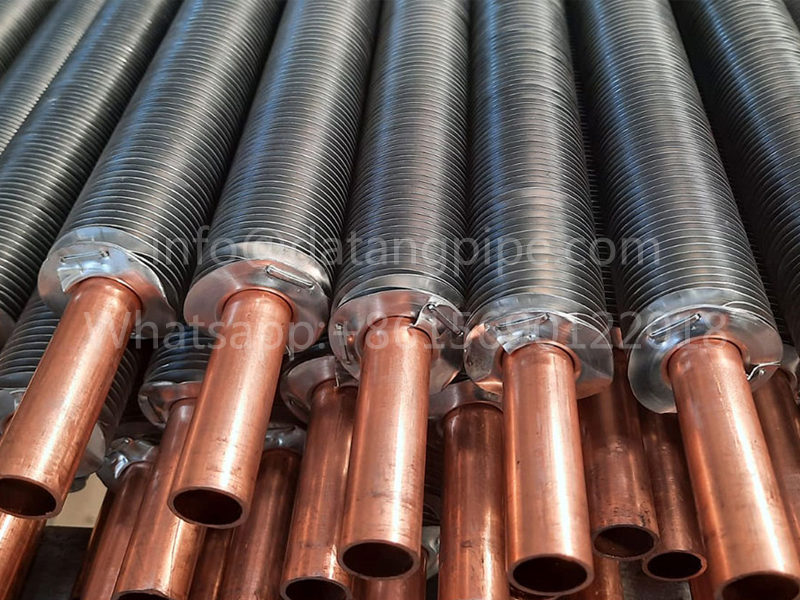
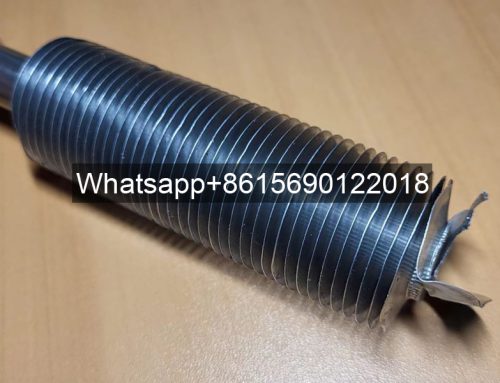
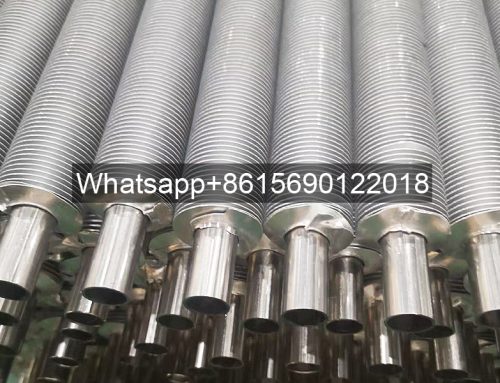
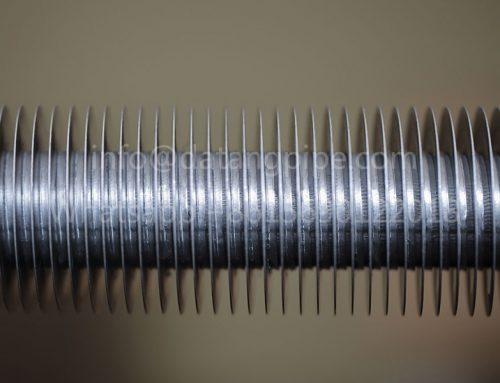
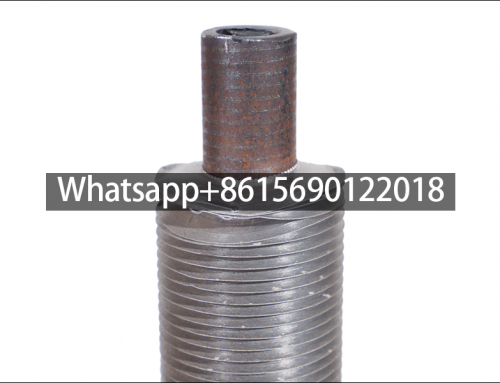
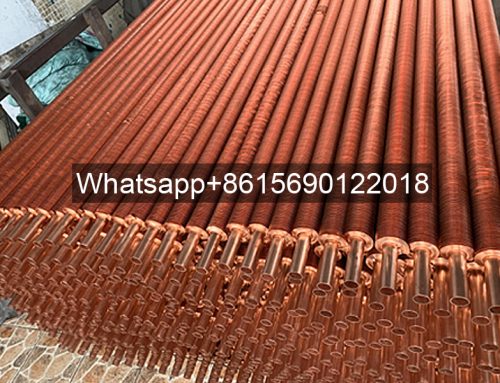
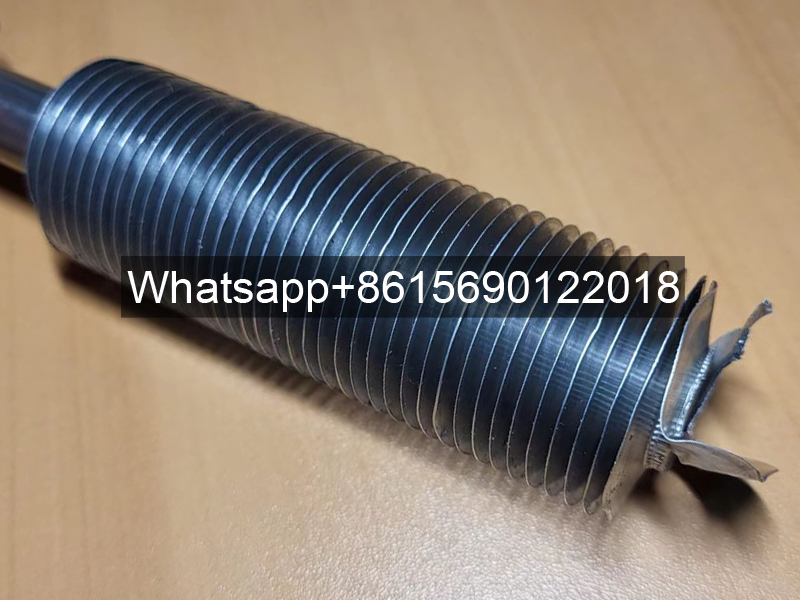
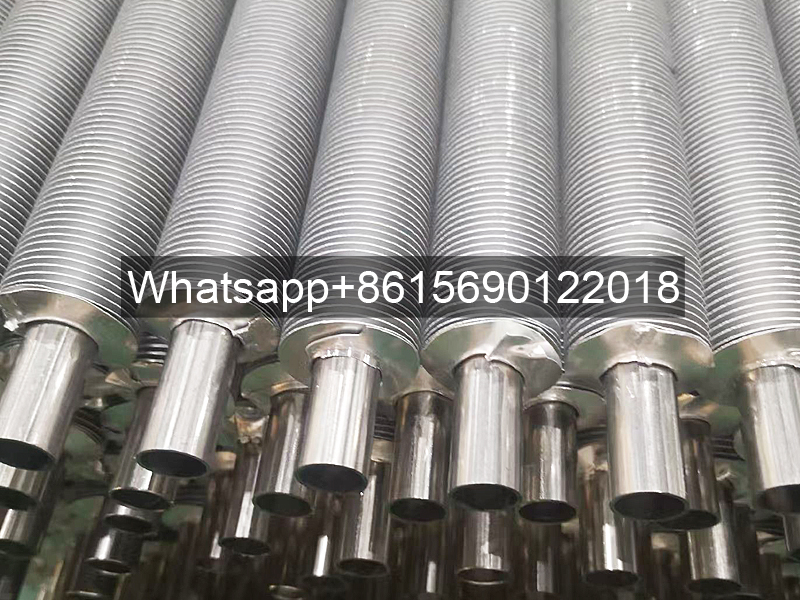
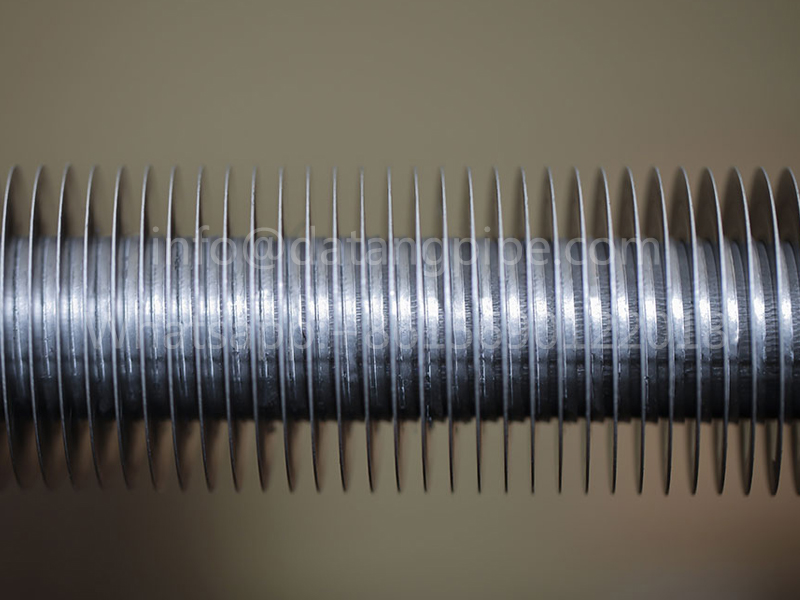
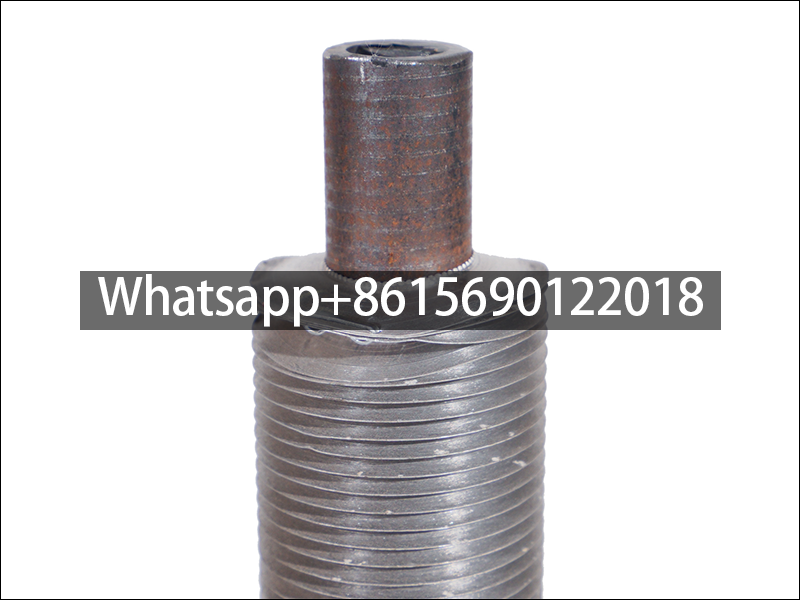
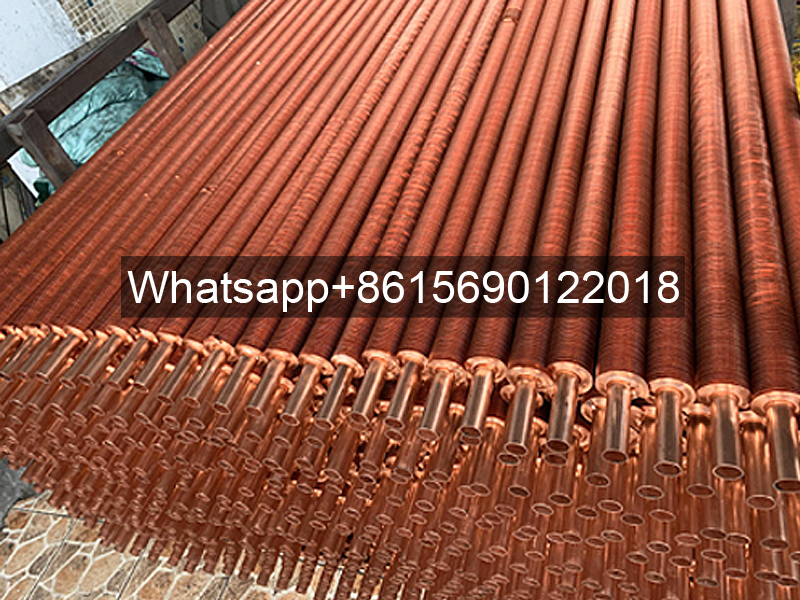
- Product Name: Copper Nickel 90 / 10 KL Footed Aluminum Fin L LL KL Type Fin Tube
- Leave Your Message
Here is the professional of the technical specifications and application details for Copper-Nickel 90/10 (UNS C70600/B10) KL/L/LL/G-Type Finned Tubes, incorporating industry standards and process characteristics:
I. Core Material Properties
-
Copper-Nickel 90/10 Alloy (UNS C70600)
- Composition: Cu 90%, Ni 10%, with Fe (1%-1.8%) and Mn (≤1%) added for enhanced strength. Impurities (Pb, Zn) strictly controlled at ≤0.05%1112.
- Performance:
- Excellent seawater corrosion resistance (ideal for marine platforms/ship heat exchangers);
- Tensile strength ≥790 MPa, high yield strength, working pressure ≤32 MPa;
- Thermal conductivity similar to carbon steel; thermal expansion coefficient comparable to stainless steel.
-
Base Tube Requirements
- Seamless Cu-Ni tubes per ASTM B466. Wall thickness tolerance ≤±0.05 mm; straightness deviation ≤4 mm/full length.
- Alloy steel tubes require spectrochemical testing per tube to ensure compositional consistency.
II. Fin Tube Types & Manufacturing Processes
(1) KL-Type (Knurled Fin Tube)
- Process: Base tube pre-knurling → Aluminum fin winding → Secondary root-rolling for enhanced bonding;
- Features:
- 50% larger contact area vs. L/LL types → lower contact thermal resistance;
- Resists thermal cycling shock (operating temp ≤250°C);
- Wrinkle-free fins with reduced fouling risk.
(2) L/LL-Type (Wound Fin Tubes)
- L-Type: High-tension winding (fin roots untreated). Max temp: 120°C;
- LL-Type: Optimized winding tension → uniform fin pitch. Max temp: 230°C;
- Shared Traits:
- High finned area ratio (5–8× increased surface area);
- Fin thickness: 0.1–0.5 mm; pitch: 1.5–3 mm (design adjustable).
(3) G-Type (Embedded Fin Tube)
- Process: Spiral grooving on base tube → Aluminum strip insertion → End welding;
- Advantages:
- High fin rigidity → superior deformation resistance;
- Pressure rating ≤32 MPa (ideal for high-pressure heat exchange).
III. Key Technical Requirements
-
Fin Parameters
- Height: 5–30 mm (typical: 15–25 mm);
- Pitch: 15–30 mm (too small ↑ resistance; too large ↓ efficiency);
- Thickness: Al fins 0.2–0.5 mm; Steel fins 0.5–0.8 mm.
-
Tube-Fin Bond Quality
- High-frequency welding fusion rate ≥90% (tested via 8-point longitudinal sectioning);
- Embedded fins: Groove-strip gap ≤0.3 mm to prevent springback/loosening.
-
Corrosion Protection & Maintenance
- Anodized fin surfaces for enhanced marine atmospheric corrosion resistance;
- Regular fin cleaning to maintain thermal efficiency.
IV. Typical Applications
- Marine & Offshore: Ship boilers, desalination evaporators (Cl⁻ corrosion resistance);
- Energy Industry: Power plant air coolers, waste heat recovery (KL-type for ≤250°C);
- Petrochemicals: Oil/gas heat exchangers, FGD systems (G-type for high pressure).
V. Selection Guidelines
- High-Temp (>200°C): Prioritize KL-type for thermal stability;
- Corrosive Environments: Combine Cu-Ni base tube + Al fins (balance conductivity/corrosion resistance);
- Customization: Provide media temp/pressure/flow rate to optimize fin pitch/height.